Brown Bear
The brown bear is Norway's largest land predator. With its massive build and impressive strength, the brown bear is a symbol of power and wilderness.
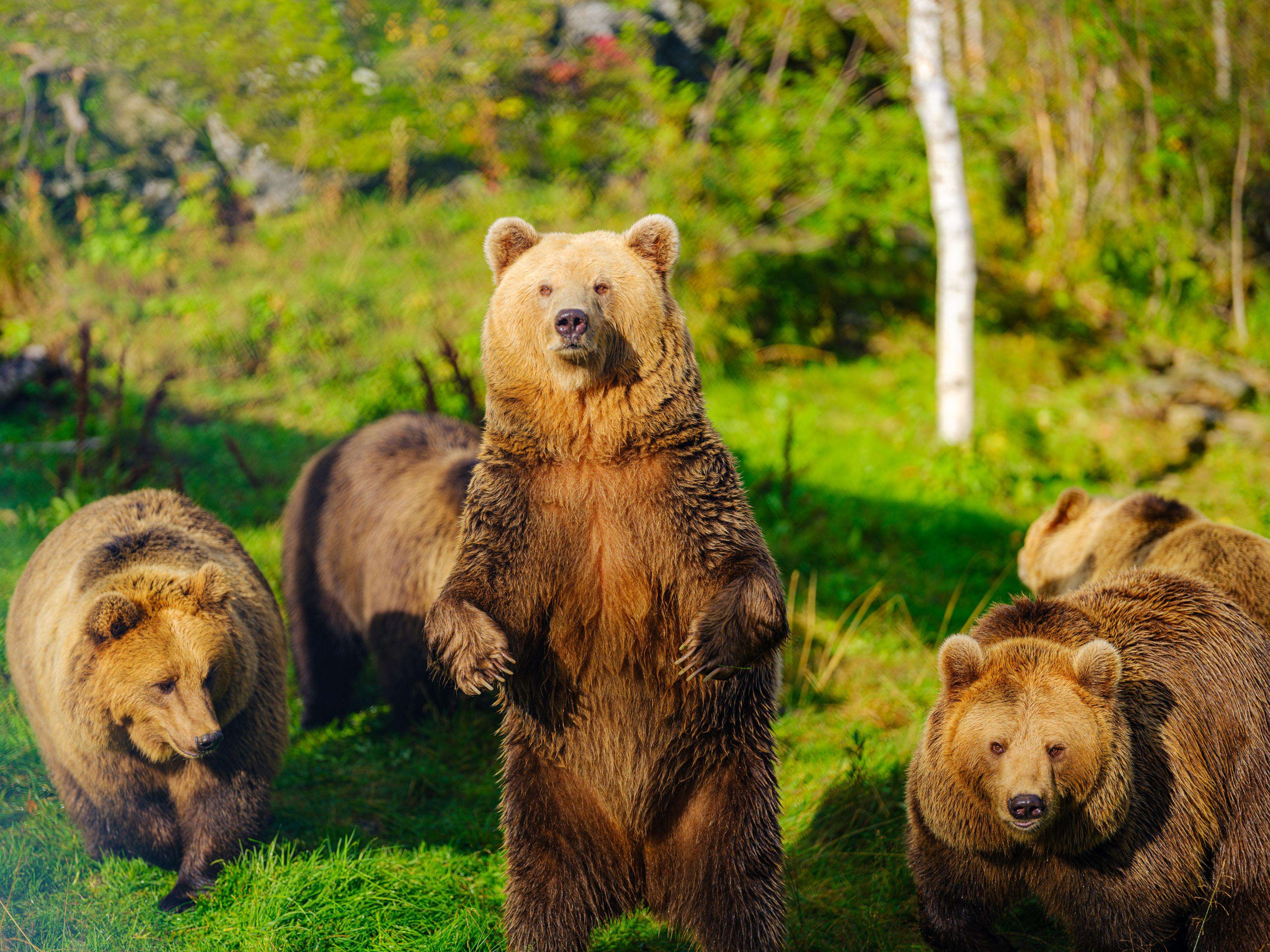
- Scientific Name: Ursus arctos.
- Conservation Status: Vulnerable (VU) in Norway; classified as Least Concern (LC) globally.
- Length: Up to 2.5 metres when standing upright.
- Weight: Males weigh 150–300 kg; females weigh 100–200 kg.
- Distribution: Forests and mountainous regions across Europe, Asia, and North America.
- Biology: Reaches sexual maturity at 3–5 years of age. Gestation lasts approximately 6–8 months, and females give birth to 1–4 cubs in the den.
- Lifespan: 20-30 years.
- Diet: Omnivorous – feeds on berries, fish, meat, and plants.
At Polar Park, we have two large enclosures for brown bears. The oldest and largest resident is Truls, a male bear born in 1998. He came to us from Vassfaret and has lived at Polar Park longer than any of our other bears. We also have our well-known bear siblings, Salt and Pepper, who were born at the park in 2009. What makes them especially unique is that Salt is an albino bear, which is how the siblings got their names.
CTA: Rovdyrsguiding
Lean More About the Brown Bear
The brown bear is remarkably adaptable and survives the winter by hibernating, living off the fat reserves it has built up during the warmer months. During hibernation, both its heart rate and body temperature decrease to conserve energy. Brown bears are omnivores with a varied diet that changes throughout the year. In spring and summer, they mainly feed on grasses, ants, and meat, while in autumn they focus on eating large quantities of berries to build fat reserves before winter. They typically remain in their den from late autumn until early spring.
The mating season takes place in May and June. Although the female is pregnant for around eight months, the embryo does not begin developing until she has entered hibernation, a process known as delayed implantation. Cubs are usually born in January or February while the mother is still in her den. At birth, they weigh only about 500 grams but grow rapidly on their mother's milk.
Brown bears can sprint at speeds of up to 60 km/h over short distances and are also excellent swimmers.
Gallary
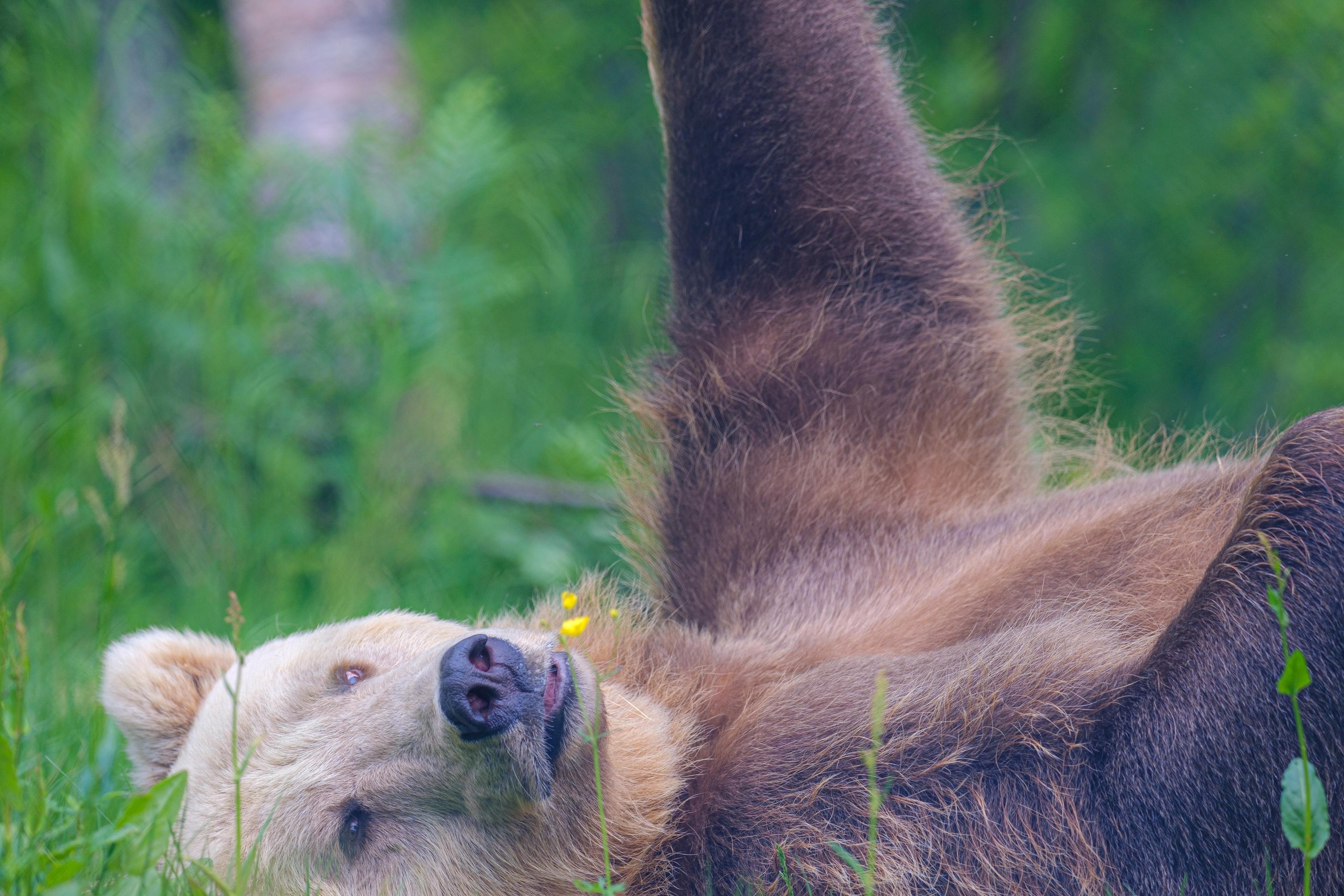
What Do the Bears Do During Winter?
When the temperatures drop, our bears enter hibernation, but what really happens during this fascinating state?
What Is Hibernation?
During hibernation, a bear's body dramatically reduces its energy consumption to conserve the fat reserves it has built up. Its heart rate can drop to as few as 8 beats per minute!
Our bears are not completely "asleep" throughout the winter. They wake up from time to time but spend most of the season resting quietly.
Preparing for Winter
Throughout the autumn, the bears eat large amounts of food to build up the fat reserves they need for hibernation. Our animal keepers provide a nutritious, carefully balanced diet to support this process.
Can Bears Wake Up During Hibernation?
Yes. During periods of mild weather, bears may wake up from hibernation. They are usually sluggish and inactive, and after a short while they return to their den and go back to hibernating.