Eurasian Lynx
The Eurasian lynx is a medium-sized member of the cat family (Felidae) and is considered one of Europe’s “Big Five” (alongside the wolf, brown bear, wolverine and European bison).
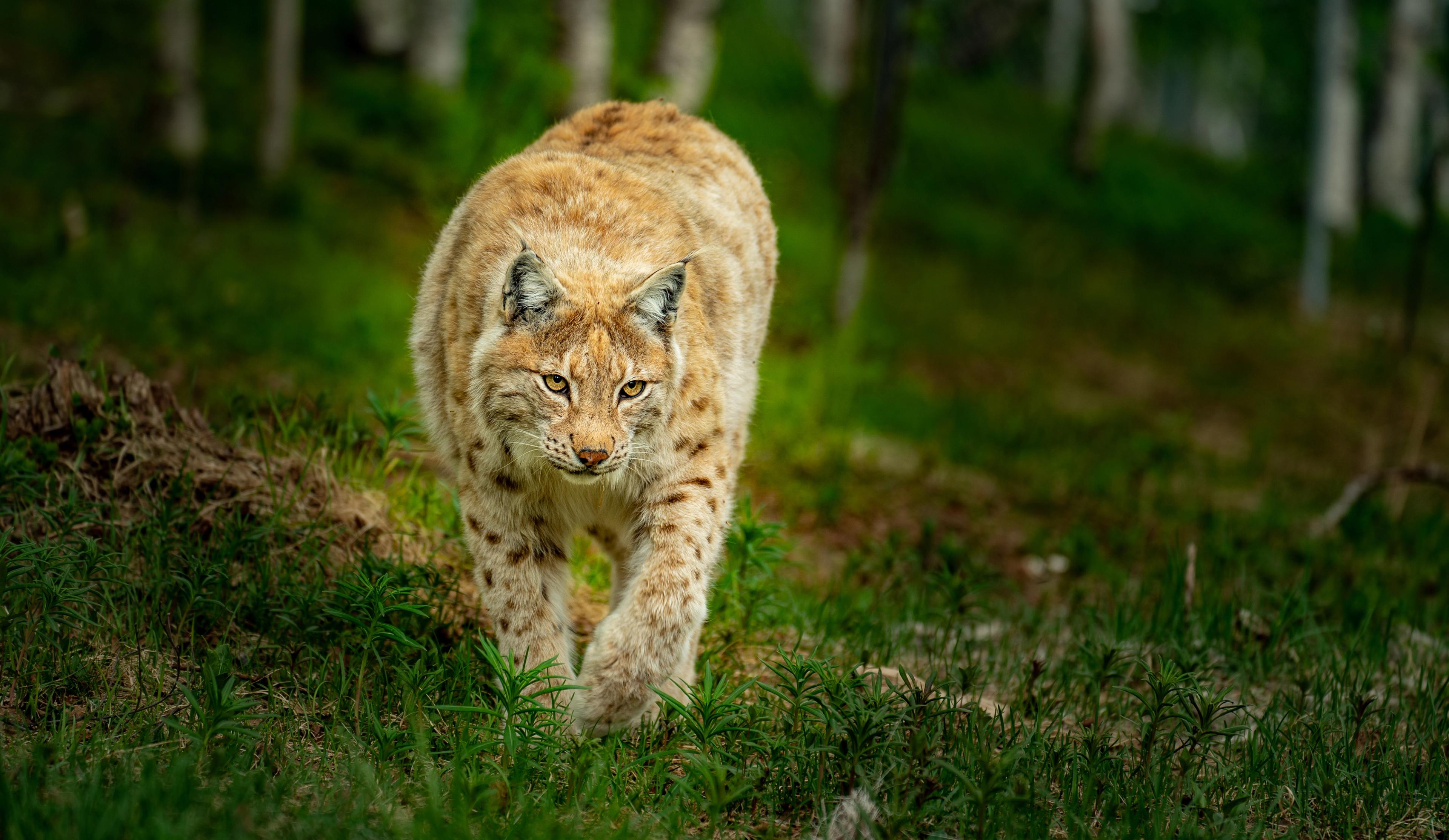
- Scientific name: Lynx lynx
- Status: Classified as Endangered on the Norwegian Red List for Species, while globally the International Union for Conservation of Nature considers the species to be of Least Concern.
- Length (excluding tail): Up to 120 cm, with a short tail of 10–25 cm
- Weight: Males weigh on average 23 kg, but can reach up to 25 kg. Females weigh on average 17 kg
- Distribution: The lynx inhabits northern parts of the world, from Scandinavia to Siberia
- Biology: Reaches sexual maturity at 2–3 years of age. The female has a gestation period of around 70 days and gives birth to 1–4 cubs in May–June
- Lifespan: Up to 17 years
- Diet: Roe deer, hare, small rodents, birds, fox, reindeer, sheep
At Polar Park, we have two adult lynx: “Frost”, from Dyreparken (born in 2009), and “Lille Brun” (born in 2015). Frost is the father of Lille Brun.
Learn more about the lynx
The Eurasian lynx (Lynx lynx) is a shy and majestic hunter that thrives in secluded forest habitats. It has a distinctive appearance, with a short tail, large paws that act like snowshoes, and characteristic black tufts on the tips of its ears. Its coat is thick and adapts to the seasons; in summer it is reddish-brown, while the winter coat turns greyish-white to provide effective camouflage in snowy terrain.
The scientific name Lynxlynx means “to shine” and relates to the reflective layer in the eyes. Like other cats, the lynx has this adaptation, which enhances night vision.
The patient hunter
The lynx is a solitary hunter that is mainly active at night. It moves at a walking pace and avoids open areas, but is also a capable climber and swimmer. Its hunting strategy is carefully planned; it stalks its prey before launching an explosive final sprint. The lynx is extremely fast, though not particularly enduring, and usually succeeds within 20–30 metres. Sight and hearing are crucial during the hunt, especially in dense forests.
Its diet mainly consists of ungulates such as roe deer and semi-domesticated reindeer, but it may also take smaller prey such as hares and birds.
Perfectly adapted to forest life
During the day, the lynx often rests in so-called day beds, sheltered spots that provide a good view of the surrounding area. Territories vary in size depending on food availability, and males typically have larger ranges than females. In northern regions, territories can span several thousand square kilometres.
The lynx lives alone except during the mating season, which takes place from January to March. After a gestation period of around 70 days, the female gives birth to one to three cubs, often in hidden locations such as dens or rock crevices. The cubs remain near the den during the first months before gradually following their mother on hunts. Within a year, they separate, and many travel long distances to establish their own territories.
Want to learn more?
At the Predator Centre, children and young people can learn more about the lynx and other predators, watch animated films, and test their knowledge through fun quizzes.