Moose
The moose is the "King of the Forest" and the world's largest member of the deer family - an iconic symbol of the Nordic wilderness.
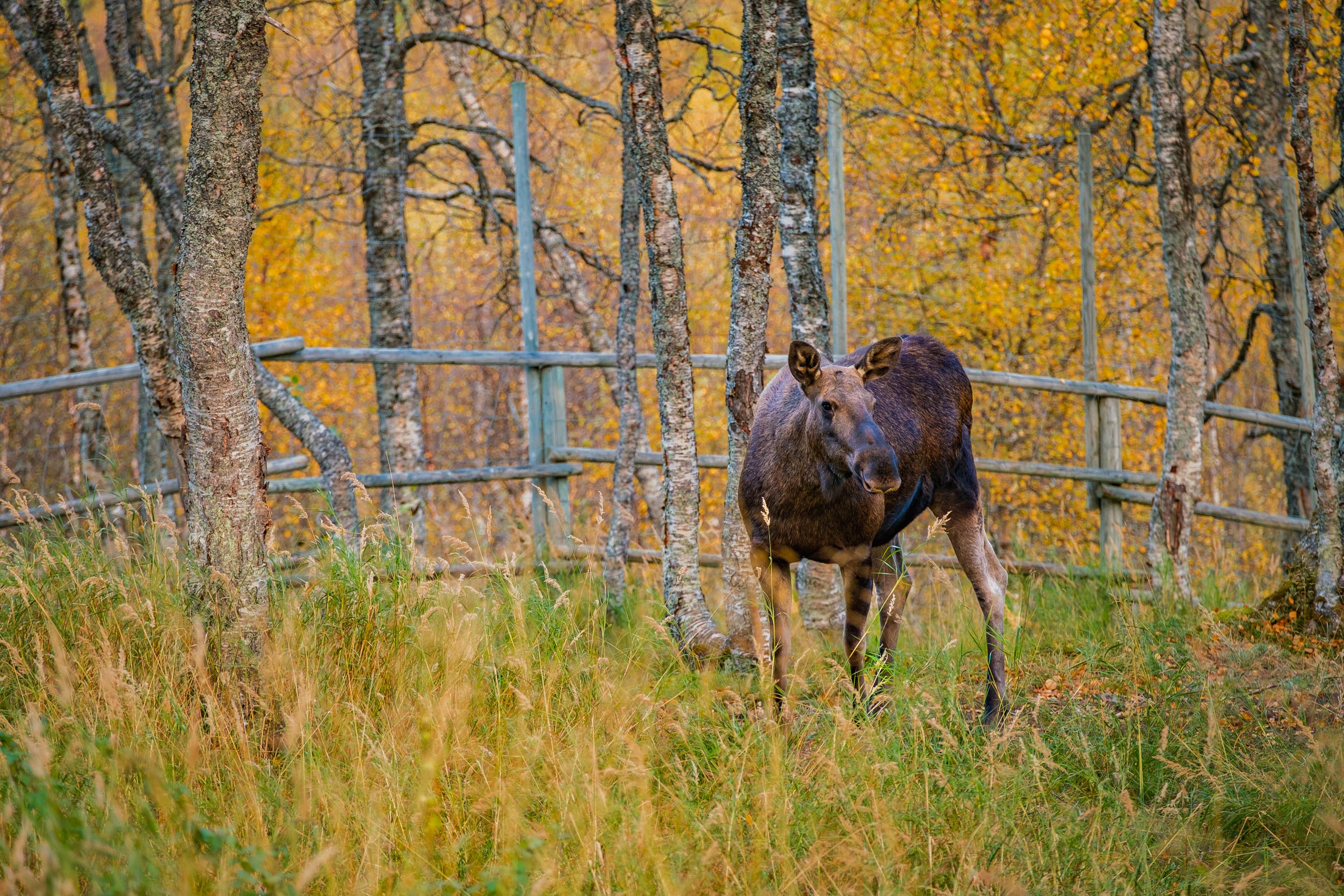
- Scientific name: Alces alces
- Conservation status: Least Concern (LC) on the Norwegian Red List for Species
- Height: Up to 1.9 to 2.3 metres at the shoulder
- Length: Up to 2.5 to 3.2 metres
- Weight: Males weigh 400 to 700 kg, while females weigh 300 to 500 kg
- Distribution: Northern forest regions of Europe, Asia and North America
- Biology: Reaches sexual maturity at 1.5 to 2 years of age. Females are pregnant for around 8 months and usually give birth to 1 to 2 calves in spring.
- Lifespan: Up to 20 years in the wild
- Diet: Grasses, leaves, buds and bark
Learn More About the Moose
The moose is well adapted to life in forests and wetlands. It has a distinctive high shoulder hump, long legs and a broad muzzle that helps it feed, even in wet or snow-covered areas. Males grow large antlers each year, which they use during the rutting season in autumn.
Moose are generally calm and shy, but they can become aggressive if they feel threatened, especially during the rutting season or when protecting their calves.
As herbivores, moose feed on fresh leaves and grasses in summer. In winter, they rely on twigs, bark and lichens. Moose are also strong swimmers and often feed in water, where they find nutrient-rich aquatic plants.