Musk Ox
The musk ox is a true survivor from the Ice Age. With its powerful build and thick coat, it is perfectly adapted to the harsh Arctic climate and has become a symbol of strength and endurance.
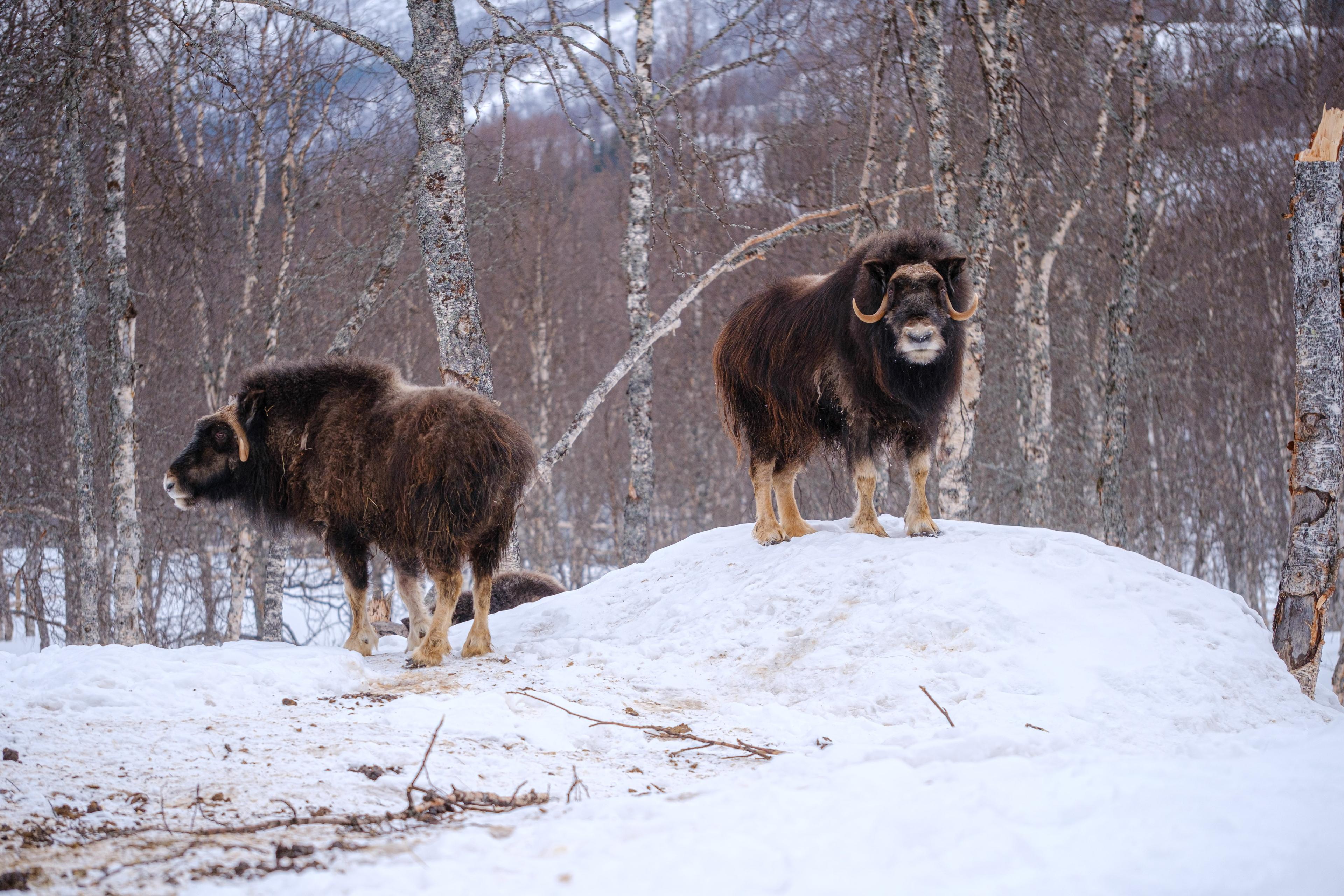
- Scientific name: Ovibos moschatus
- Conservation status: Least Concern (LC), although vulnerable in some local populations
- Length: Up to 2.5 metres
- Weight: Males weigh 250 to 400 kg, females 200 to 300 kg
- Distribution: Tundra regions of Canada, Greenland and Norway (Dovrefjell)
- Biology: Reaches sexual maturity at 2 to 3 years of age. Gestation lasts around 8 to 9 months, with a single calf born in May or June.
- Lifespan: Up to 20 years
- Diet: Lichens, grasses, mosses and shrubs
Learn More About the Musk Ox
The musk ox is a relic of the Ice Age and is exceptionally well adapted to life in extreme Arctic conditions. Its thick coat consists of two layers that provide protection in temperatures as low as -50°C. The long, coarse outer coat shields the animal from wind and snow, while the soft undercoat, known as qiviut, is one of the warmest natural fibres in the world.
Musk oxen live in small herds and are well known for their remarkable defensive behaviour. When threatened, they form a protective circle with their horns facing outwards while the calves remain safely in the centre. This strategy helps defend the herd against predators such as wolves and bears.
As herbivores, musk oxen feed mainly on lichens and mosses during winter, while grasses and shrubs make up much of their diet in summer.