Red Deer
The red deer is one of Norway's most iconic deer species. Known for its graceful movements and impressive antlers, it has long been a symbol of the country's forests and wildlife.
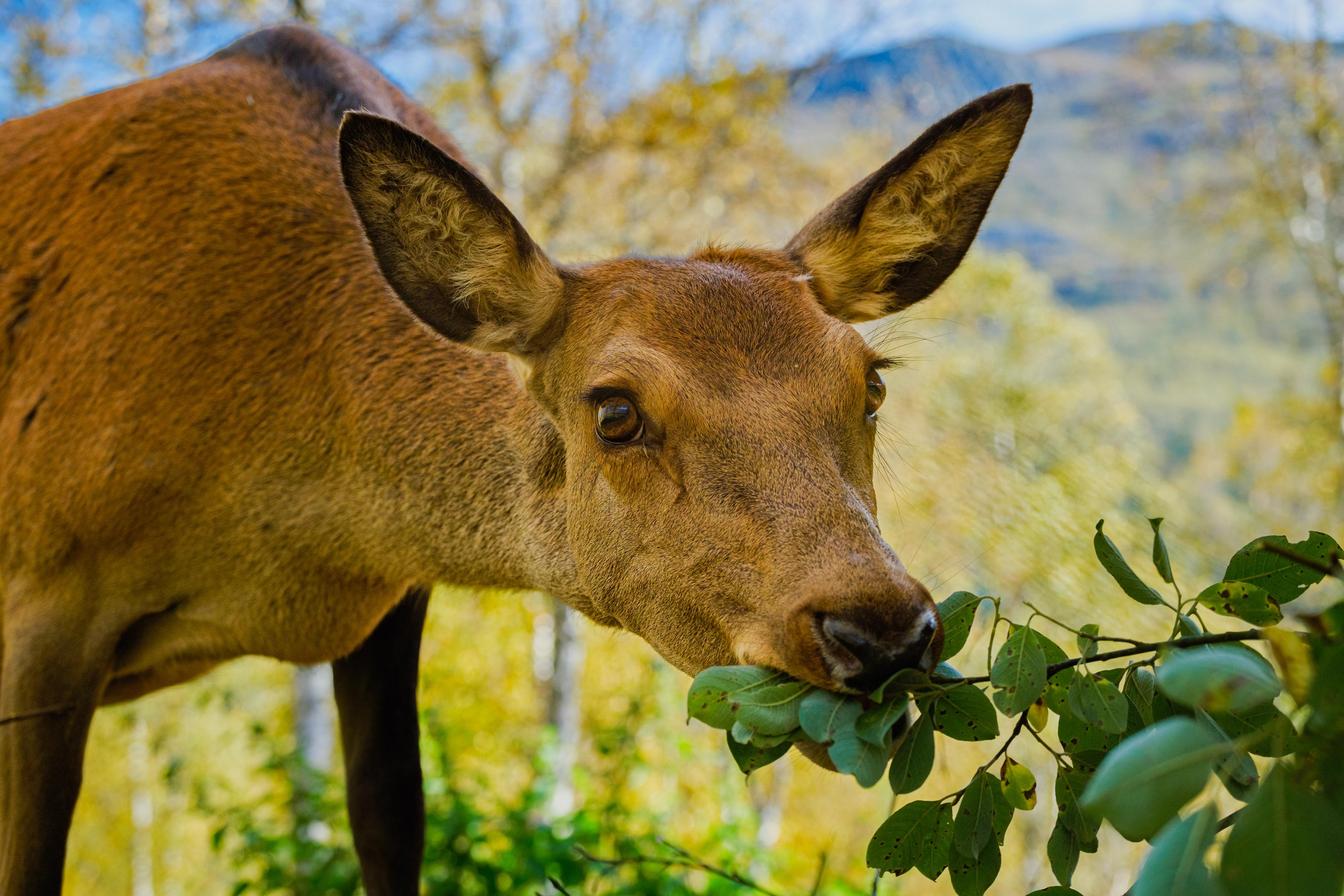
- Scientific name: Cervus elaphus
- Conservation status: Least Concern (LC)
- Height: 1.2 to 1.5 metres at the shoulder
- Weight: Males weigh 200 to 300 kg, while females weigh 120 to 200 kg
- Distribution: Europe, Asia and North America
- Biology: Reaches sexual maturity at 1.5 to 2 years of age. Gestation lasts around 8 months, with a single calf born each spring.
- Lifespan: Up to 20 years
- Diet: Grasses, leaves and bark
Learn More About the Red Deer
The red deer is highly adaptable and thrives in both forests and open landscapes. It is well known for migrating between summer and winter grazing areas, often covering long distances. During winter, red deer frequently gather in small herds for protection, while in summer they tend to live in smaller groups or on their own.
Male red deer shed their antlers each winter, which regrow during spring. Their large, branching antlers are an important symbol of strength and dominance. The size of the antlers depends on the deer's age, health and nutrition.
The red deer has long held an important place in Norway's cultural heritage and is often featured in art, hunting traditions and folklore. The elegant silhouette of a stag during the autumn rut has become an enduring symbol of the Norwegian wilderness.