Reindeer
The reindeer is an iconic deer species, perfectly adapted to life in Arctic climates. It also holds great cultural significance in Norway, particularly for the Sámi people.
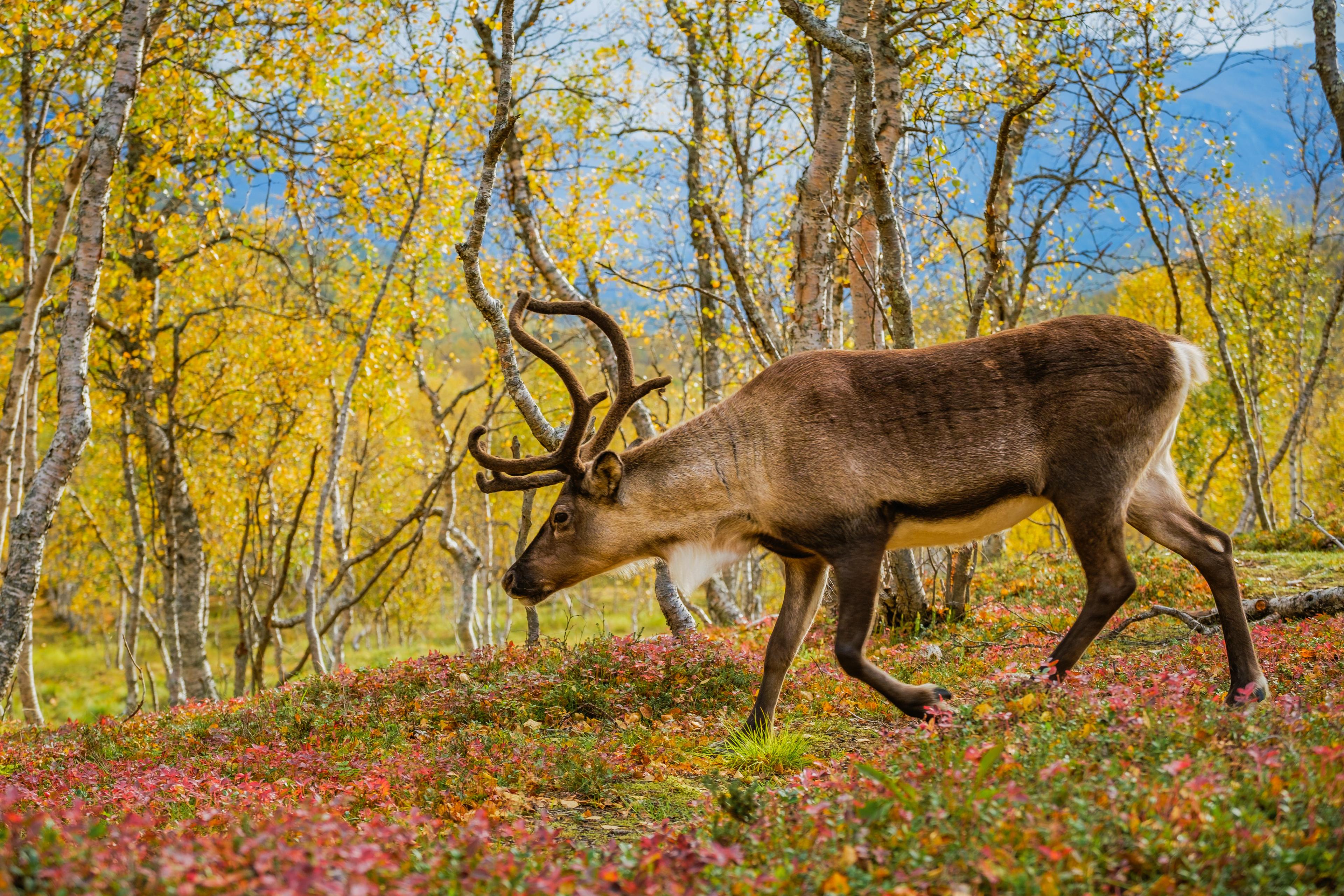
- Scientific name: Rangifer tarandus
- Conservation status: Least Concern (LC), although some populations are threatened
- Length: 180 to 220 cm
- Weight: 60 to 300 kg, depending on the subspecies
- Distribution: Arctic and sub-Arctic regions of Europe, Asia and North America
- Biology: Reaches sexual maturity at 1.5 to 2 years of age. Gestation lasts around 7 months, with a single calf born in spring.
- Lifespan: 15 to 20 years
- Diet: Lichens, mosses, grasses and leaves
Learn More About Reindeer
Reindeer are well known for their ability to find lichens beneath the snow and for their distinctive antlers. They are the only deer species in which both males and females grow antlers. Males have larger antlers, which they shed after the autumn rut, while females keep theirs throughout the winter to help defend access to food.
The mating season takes place in September and October. After a gestation period of around 230 days, the female gives birth to a single calf in spring. Calves are well developed at birth and can follow their mothers almost immediately.
Reindeer are among the few mammals that thrive in extreme Arctic conditions. Their thick coat provides excellent insulation, while their specialised nasal passages warm the cold air before it reaches the lungs. Their hooves also adapt to the seasons, becoming harder in winter to help them dig through snow and ice in search of food.