Wolf
The wolf is one of Norway’s most iconic and debated predators. It is highly adaptable, which explains the species’ wide geographical variation in appearance and behaviour.
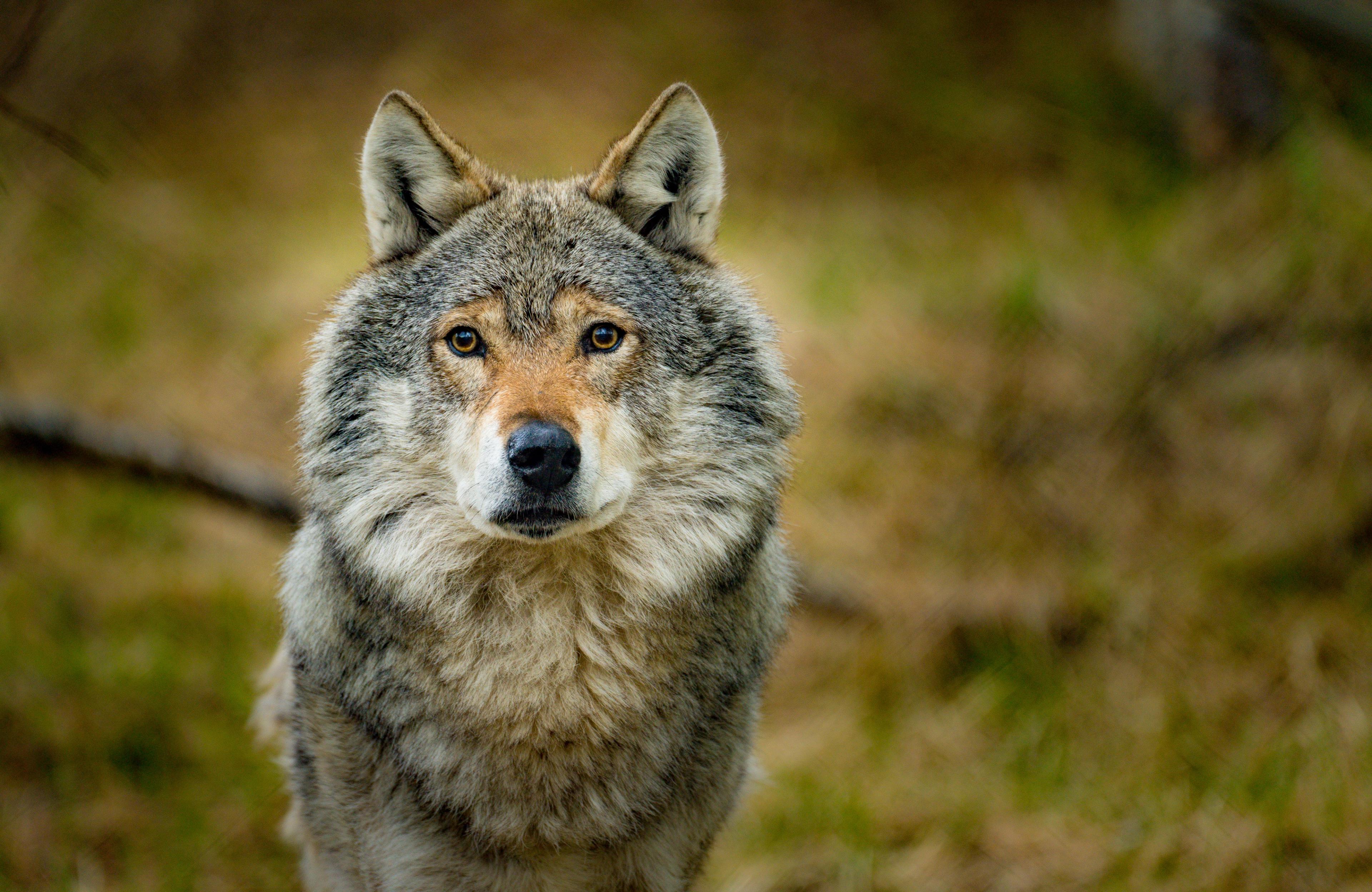
- Scientific name: Canis lupus
- Status: Classified as Critically Endangered on the Norwegian Red List for Species, while globally the International Union for Conservation of Nature considers the species to be of Least Concern
- Length: The body measures 1–1.5 metres, and the bushy tail can reach up to 50 cm
- Weight: Males typically weigh 40–50 kg, while females weigh between 35–40 kg
- Distribution: North America, Europe, the Middle East and Asia
- Biology: Reaches sexual maturity at 2–3 years of age. The female has a gestation period of around 60 days and gives birth in April–May, with an average litter of 4–6 pups
- Lifespan: Up to 16 years, although this is rare
- Diet: Roe deer, moose, red deer, small rodents
At Polar Park, we have two large enclosures with wolves. “Steinulv”, our wild wolves from Sweden (born in 2008 and 2023), as well as a pack of our socialised wolves (born in 2014).
CTA: WOLF VISIT
Learn more about the wolf
Wolves form strong family bonds and have a complex social structure. A pack usually consists of a breeding pair and their offspring. The parents, which live in a lifelong monogamous relationship, act as the leaders of the pack. An adult wolf typically weighs between 30 and 50 kilograms and can measure up to 160 cm from nose to tail tip. Coat colour varies from grey and brown to almost pure white or black, allowing the wolf to adapt to different climates.
Pack life and family bonds
Wolves are skilled and enduring hunters. With sharp senses and powerful jaws, they hunt by pursuing prey over long distances, often covering up to 60 kilometres in a single day. Wolves mainly hunt ungulates such as moose and roe deer, but they also feed on smaller animals and carrion. When wolves howl, they communicate with the pack, coordinate hunts and maintain contact across vast distances.
An adaptable yet threatened species
Despite its adaptability, the wolf is a threatened species in Norway and is found only in limited areas. The conflict between humans and wolves makes the species both admired and controversial. Wolves are naturally shy and tend to avoid human settlements.
Want to learn more?
At the Predator Centre, children and young people can learn more about wolves and other predators, watch animated films, and test their knowledge through fun quizzes.