Wolverine
The wolverine is Norway's largest member of the weasel family, yet it weighs only 12–18 kg and is roughly the size of a badger.
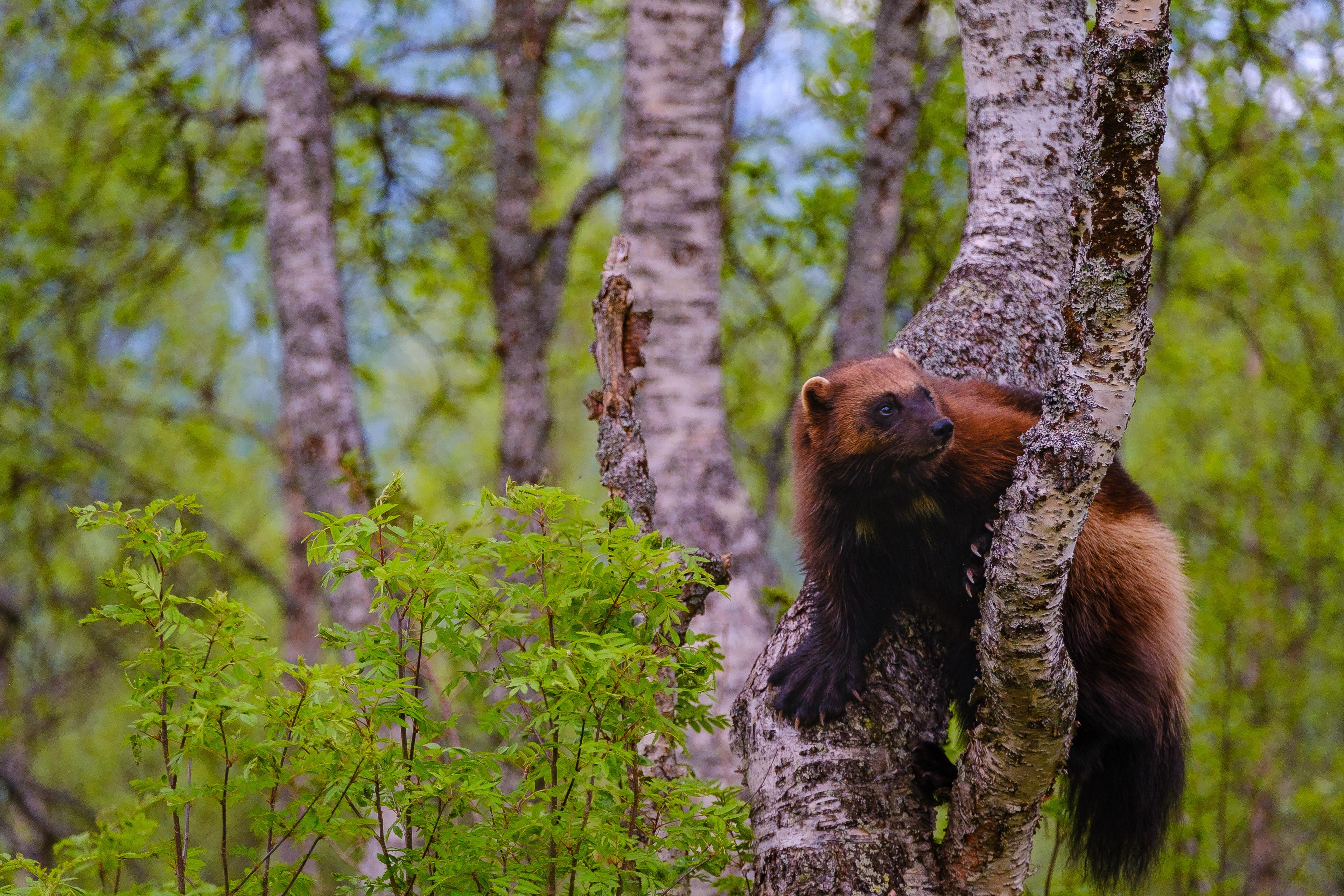
- Scientific Name: Gulo gulo
- Conservation Status: Classified as Endangered (EN) on the Norwegian Red List, but listed as Least Concern (LC) globally by the IUCN.
- Length: 70–85 cm in body length, with a bushy tail measuring 25–35 cm.
- Weight: 8-12 kg.
- Distribution: Found across the Northern Hemisphere, closely associated with the range of wild reindeer. Wolverines occur in northern Eurasia and North America, including Norway, Sweden, Finland, Estonia, Russia, Mongolia, China, Canada, and Alaska.
- Biology: Reaches sexual maturity at 3–5 years of age. Females have a gestation period of approximately 30–50 days (following delayed implantation) and usually give birth to litters of 1–3 kits in February or March.
- Lifespan: Up to 17 years, although it is rare for wolverines to live that long.
- Diet: Primarily carrion, but also birds, small rodents, reindeer, sheep, and some plant material.
At Polar Park, we are home to one wolverine. Our wolverine, Bor, was born in 2018 and arrived from Kristiansand Zoo in February 2019.
CTAFotoguiding
Learn More About the Wolverine
With its compact body, short legs, and thick fur, the wolverine is perfectly adapted to life in cold climates. Its dark brown coat is marked by distinctive light brown stripes along its sides, while its powerful jaws and sharp claws make it an efficient hunter and scavenger.
The wolverine is a solitary animal with remarkable endurance, capable of travelling vast distances in search of food. During winter, its large, fur-covered paws act like natural snowshoes, allowing it to move easily across deep snow and giving it an advantage over larger prey such as reindeer. Known for its fearless nature, the wolverine may even challenge wolves or bears to claim a carcass.
Although the wolverine is capable of hunting large prey such as reindeer, it primarily feeds on carrion. Its exceptional sense of smell allows it to locate carcasses from great distances. It can carry entire prey animals, or large portions of them, for several kilometres. The wolverine is also an expert at storing food for times of scarcity, often hiding it near its den. Females usually give birth to one to three kits in snow dens, and the young remain with their mother for a long time before becoming independent.