Ski Safety in Narvik Ski Resort
Read up on our rules and guidelines for staying safe in the ski resort. Here you’ll find information about accessing the slopes outside opening hours, during slope grooming and snowmaking, as well as the ski patrol’s work and responsibilities in the resort.
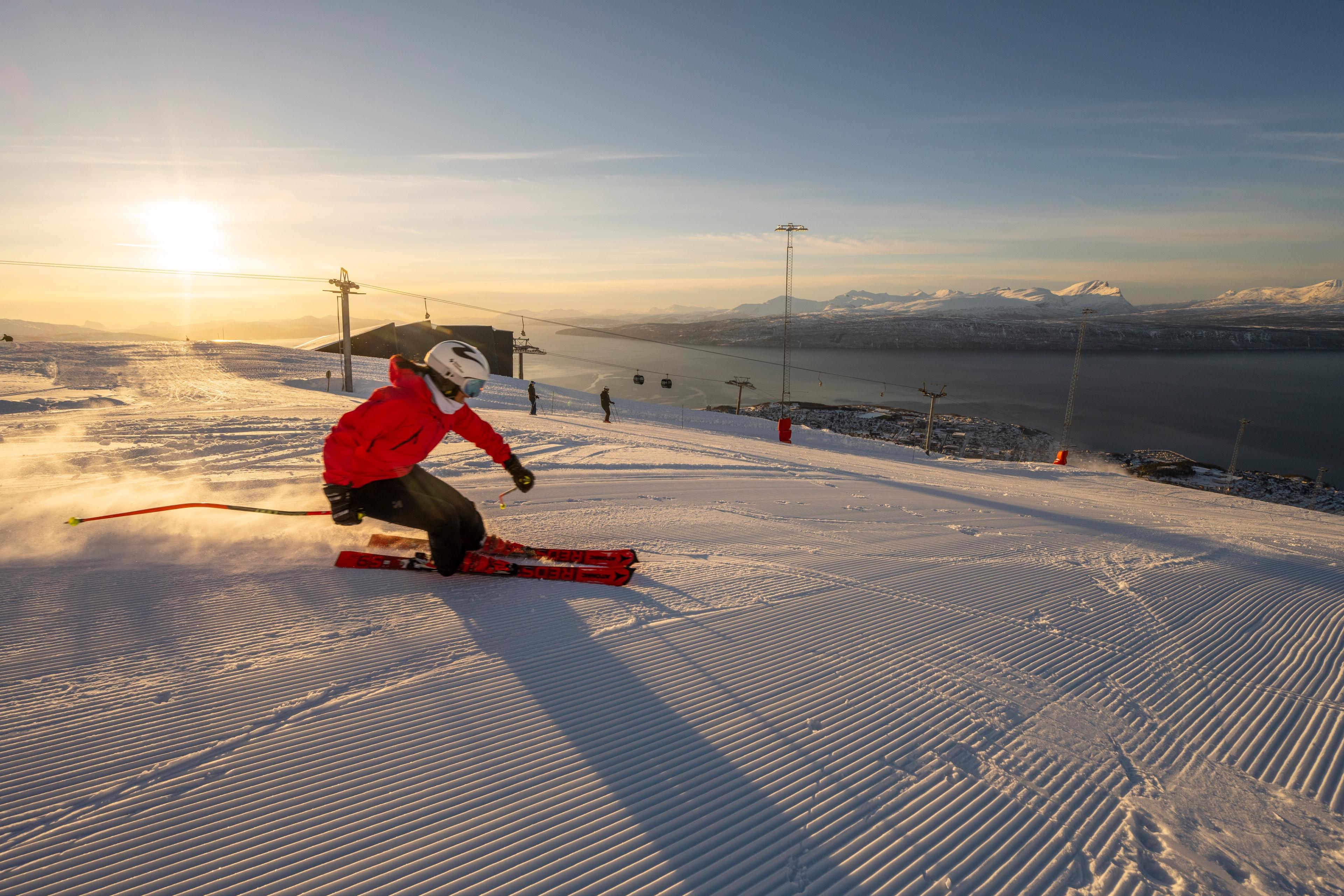
Did you know that access to the ski resort is prohibited outside opening hours? This restriction applies to skiing, ski touring, snowshoeing, the use of vehicles, cycling, sledding and all other activities within the ski resort. The restriction does not apply to Fjellveien or the children’s area by the Ski Shop, unless signs or banners in these areas indicate otherwise.
Winch Cable During Slope Grooming
Snow groomers use winch cables to prepare steep slopes and when snow conditions are challenging. If the tracks begin to slip, the quality of the grooming is reduced, making the winch cable essential for grooming steep terrain.
Our operations team uses winches with steel cables daily to groom the resort’s slopes. The cable can snap during use, making both the cable and the snow groomer itself potential hazards during grooming operations. The steel cable can be up to 1,000 metres long.
Depending on the terrain, the cable may sometimes be hidden beneath the snow or suspended in the air while the snow groomers are operating. The steel cable can cause serious injury or even death if someone comes into contact with it at speed. On unstable terrain, the cable may also move in unpredictable directions and at unexpected speeds.
This is why it is strictly prohibited to enter or remain in or near slopes and areas where grooming operations are taking place.
Snow grooming operations are regulated by the Norwegian Road Traffic Act, which means that the snow groomer operator may be held responsible in the event of an accident during grooming. For this reason, snow groomer operators have the authority to ask guests to leave the resort or the affected area if these restrictions are not respected.
Snow Production
Snow production involves several hazards, including icy snow piles and changing slope conditions caused by wet snow, even at low temperatures. We use hoses operating under extremely high pressure, and electrical cables may be exposed. Contact with this equipment, or accidents caused by carelessness, can have fatal consequences.
Access to the ski resort is prohibited during snowmaking operations.
Ski Patrol
Although the risk of injury at ski resorts is relatively low compared to the millions of ski days recorded at Norwegian ski resorts each year, this does not make an accident any less tragic for those affected. Every accident is one too many. This is the guiding principle behind our commitment to ski safety.
We have a skilled and experienced ski patrol team on duty whenever the resort is open. All members of the team are trained in slope safety and marking, as well as first aid and medical emergency response.
We stay up to date with the latest developments in ski safety through close cooperation with the industry association Norwegian Ski Resorts and Mountain Destinations, which maintains strong connections with similar organisations in other European countries.
Please Note
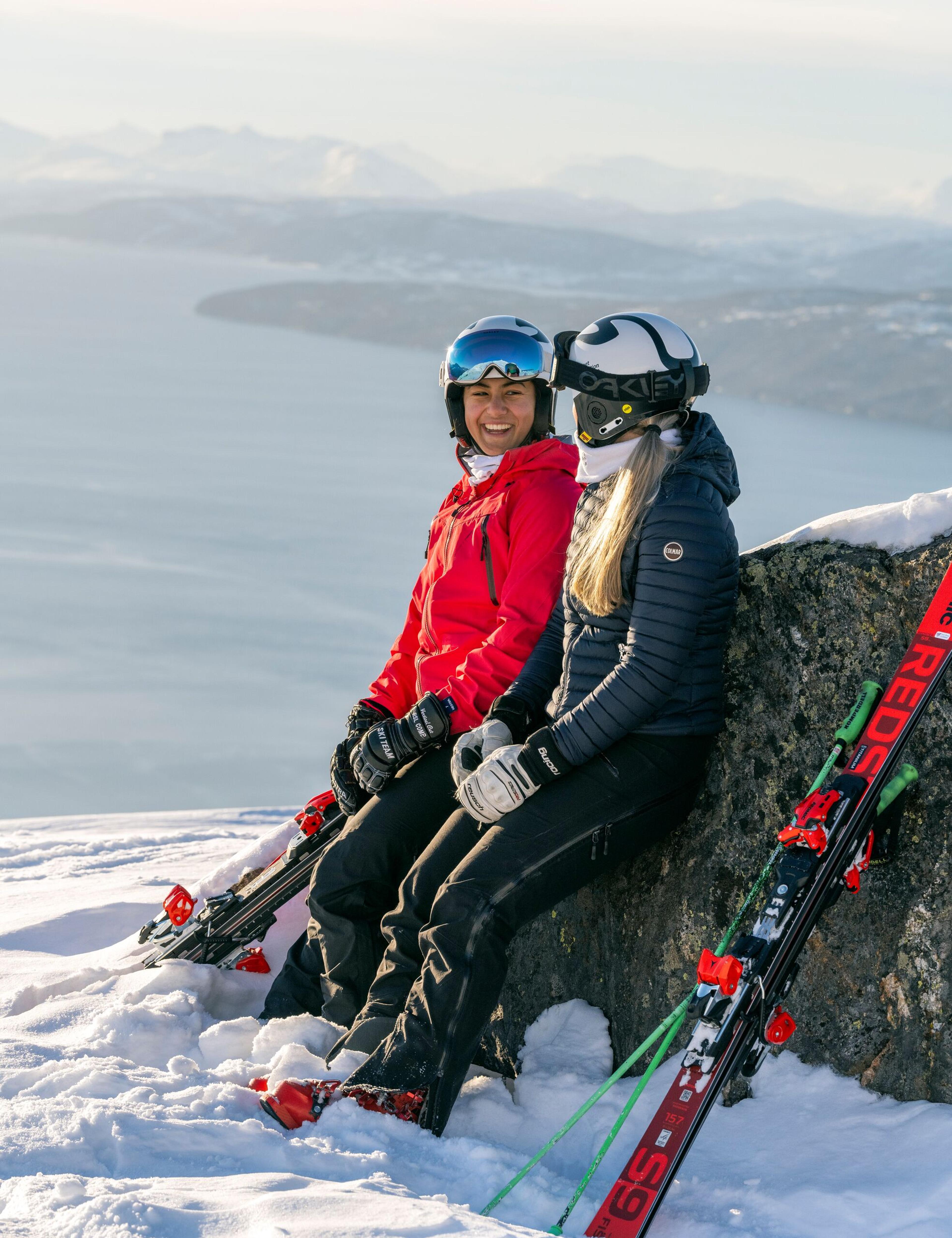
Alpine skiing involves certain risks. Alcohol, drugs and skiing do not mix. Failure to follow the Alpine Skiing Safety Rules may result in being asked to leave the ski resort.
Alpine Skiing Safety Rules
1. Responsibility to Avoid Injury
You must behave in a way that does not endanger yourself or others. You must always maintain control of your skis or snowboard and are responsible for ensuring that your equipment does not cause injury to others or damage to property.
2. Adjust Your Speed to the Conditions
You must ski or snowboard in a controlled manner, adjusting your speed and technique according to your ability, the terrain, weather and snow conditions, and other slope users.
3. Right of Way
If you are approaching another skier or snowboarder from behind or above, it is your responsibility to avoid a collision.
4. Overtaking and Skiing Straight Downhill
You may overtake another skier or snowboarder, provided you leave enough space for both controlled and unexpected movements. Skiing straight down the slope without turning is prohibited.
5. Starting, Entering or Turning Uphill on a Slope
When entering a slope or turning uphill, you must ensure that you do so without endangering yourself or others. The same applies when starting again after stopping.
6. Stopping on the Slope
Unless absolutely necessary, avoid stopping in narrow areas or places with limited visibility. If you fall in such an area, move to a safer location as quickly as possible.
7. Walking on the Slope
If you need to walk on a slope, always keep to the edges.
8. Respect Signs and Markings
Always follow signs, markings and instructions.
9. Assistance in the Event of an Accident
All skiers and snowboarders are required to provide assistance in the event of an accident or injury.
10. Identification
In the event of an accident or injury, witnesses and anyone involved are required to provide their personal details.